Glucose effects on the brain in the healthy and unhealthy individuals: metabolic and cognitive aspects
Авторы
-
Айнур А. Рагимова
Университет ВШЭ; Научно-исследовательский центр неврологии
 https://orcid.org/0000-0002-4370-4249
-
Дмитрий С. Петелин
Медицинский университет (Сеченовский университет)
https://orcid.org/0000-0002-2228-6316
-
Беатрис А. Волель
Медицинский университет (Сеченовский университет)
https://orcid.org/0000-0003-1667-5355
-
Оксана О. Зинченко
Университет ВШЭ
https://orcid.org/0000-0002-7976-3224
DOI:
https://doi.org/10.18413/rrpharmacology.11.730Аннотация
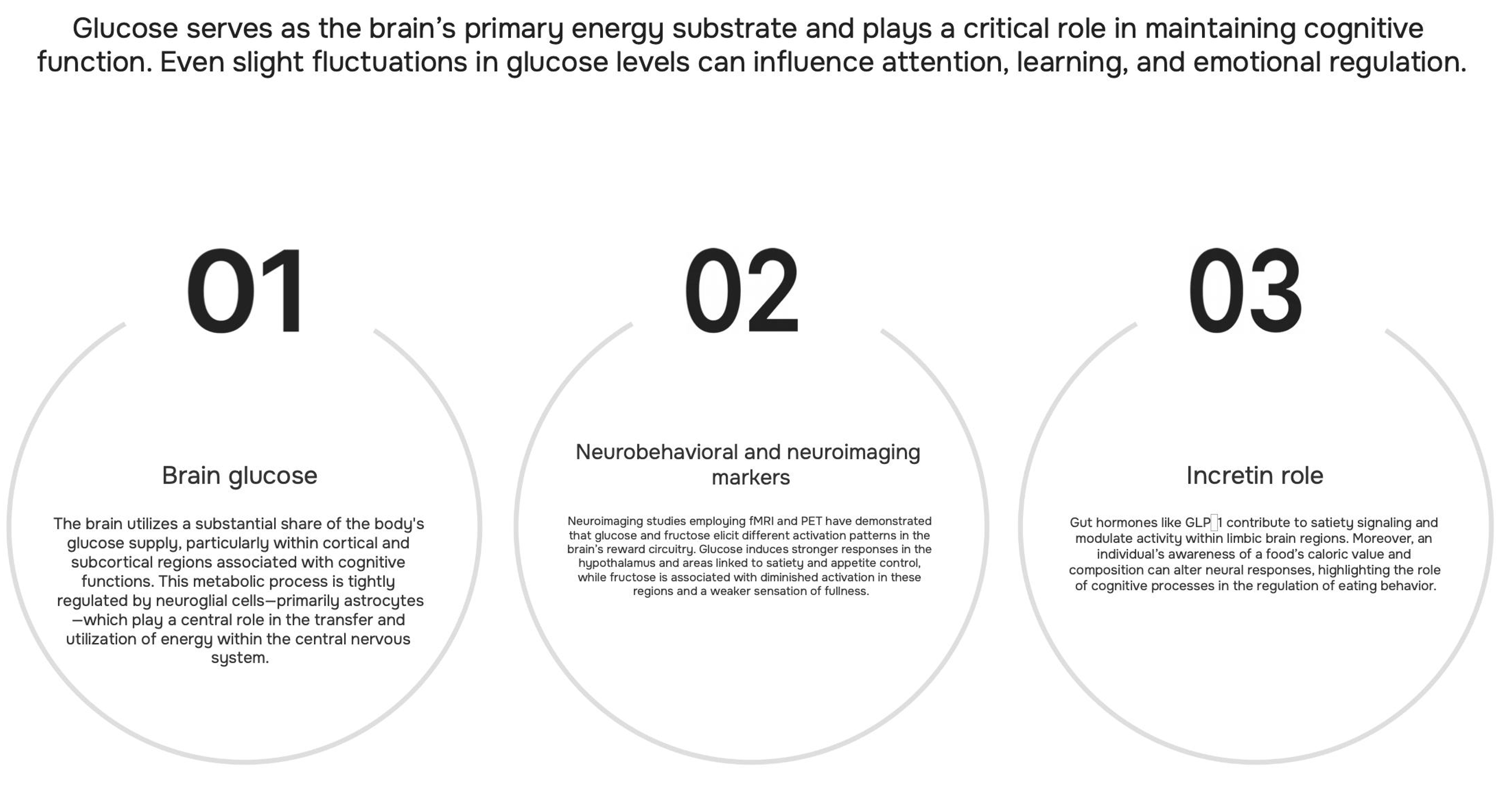
Introduction: Glucose serves as the brain’s primary energy substrate and plays a critical role in maintaining cognitive function. Even slight fluctuations in glucose levels can influence attention, learning, and emotional regulation.
Materials and Methods: The authors organised a screening of PubMed and Google Scholar reference databases on relevant articles from 1995 till 2025 to perform a systematic review.
Results: Glucose metabolism and its regulation in the brain: The brain consumes a significant portion of the body’s glucose, especially in cortical and subcortical regions involved in cognitive processing. Glucose regulation is mediated by neuroglia, particularly astrocytes, which are essential for energy transfer and utilization. Neurobehavioral and neuroimaging markers: Neuroimaging studies using fMRI and PET reveal distinct patterns of activation in the brain ’ s reward system when comparing glucose and fructose consumption. Glucose more strongly activates the hypothalamus and regions related to satiety and appetite regulation, whereas fructose is associated with a reduced sense of fullness. Effects of sweet substances on cognitive function: Comparisons between glucose and non-caloric sweeteners (e.g., sucralose) highlight differences in the engagement of dopaminergic pathways and reward anticipation mechanisms. Glucose demonstrates a more stable effect on short-term memory and attention. Role of incretins and calorie awareness: Gut hormones such as GLP-1 are involved in satiety signaling and influence activity in limbic structures. Additionally, cognitive awareness of caloric content and food composition can modulate neural responses, underscoring the importance of cognitive factors in regulating eating behavior.Conclusion: Understanding the differences in perception and processing of glucose, fructose, and non-caloric sweeteners is crucial for developing dietary strategies and interventions for metabolic and neuropsychiatric disorders. Further research into neuroenergetics and individual variability in nutrient responses may support more precise and personalized approaches in medicine.
Графическая аннотация
Ключевые слова:
neurochemistry, glycemic control, neurometabolism, energy balance, GLP-1, glucose transporters, cognitive functionБиблиографические ссылки
Aranäs C, Edvardsson CE, Shevchouk OT, Zhang Q, Witley S, Blid Sköldheden S, Zentveld L, Vallöf D, Tufvesson-Alm M, Jerlhag E (2023) Semaglutide reduces alcohol intake and relapse-like drinking in male and female rats. EBioMedicine 93: 104642. https://doi.org/1016/j.ebiom.2023.104642 [PubMed] [PMC]
Baker LD, Cross DJ, Minoshima S, Belongia D, Watson GS, Craft S (2011) Insulin resistance and Alzheimer-like reductions in regional cerebral glucose metabolism for cognitively normal adults with prediabetes or early type 2 diabetes. Archives of neurology 68(1): 51–57. https://doi.org/1001/archneurol.2010.225 [PubMed] [PMC]
Bangen KJ, Gu Y, Gross AL, Schneider BC, Skinner JC, Benitez A, Sachs BC, Shih R, Sisco S, Schupf N, Mayeux R, Manly JJ, Luchsinger JA (2015) Relationship between type 2 diabetes mellitus and cognitive change in a multiethnic elderly cohort. Journal of the American Geriatrics Society 63(6): 1075–1083 https://doi.org/10.1111/jgs.13441 [PubMed] [PMC]
Bélanger M, Allaman I, Magistretti PJ (2011) Brain energy metabolism: focus on astrocyte-neuron metabolic cooperation. Cell Metabolism 14(6): 724–738. https://doi.org/1016/j.cmet.2011.08.016 [PubMed]
Biessels GJ, Despa F (2018) Cognitive decline and dementia in diabetes mellitus: mechanisms and clinical implications. Nature Reviews Endocrinology 14: 591–604. https://doi.org/10.1038/s41574-018-0048-7 [PubMed] [PMC]
Biessels GJ, Strachan MW, Visseren FL, Kappelle LJ, Whitmer RA (2014) Dementia and cognitive decline in type 2 diabetes and prediabetic stages: towards targeted interventions. The Lancet Diabetes & Endocrinology 2(3): 246–255. https://doi.org/10.1016/S2213-8587(13)70088-3 [PubMed]
Burger KS (2017) Frontostriatal and behavioral adaptations to daily sugar-sweetened beverage intake: a randomized controlled trial. The American Journal of Clinical Nutrition 105(3): 555–563. https://doi.org/10.3945/ajcn.116.140145 [PubMed] [PMC]
Cheng G, Huang C, Deng H, Wang H (2012) Diabetes as a risk factor for dementia and mild cognitive impairment: a meta-analysis of longitudinal studies. Internal Medicine Journal 42(5): 484–491. https://doi.org/1111/j.1445-5994.2012.02758.x [PubMed]
Chong CP, Shahar S, Haron H, Din NC (2019) Habitual sugar intake and cognitive impairment among multi-ethnic Malaysian older adults. Clinical Interventions in Aging 14: 1331–1342. https://doi.org/2147/CIA.S211534 [PubMed] [PMC]
Cohen JFW, Rifas-Shiman SL, Young J, Oken E (2018) Associations of prenatal and child sugar intake with child cognition. American Journal of Preventive Medicine 54(6): 727–735. https://doi.org/1016/j.amepre.2018.02.020 [PubMed] [PMC]
Crane PK, Walker R, Hubbard RA, Li G, Nathan DM, Zheng H, Haneuse S, Craft S, Montine TJ, Kahn SE, McCormick W, McCurry SM, Bowen JD, Larson EB (2013) Glucose levels and risk of dementia. The New England Journal of Medicine 369(6): 540–548. https://doi.org/10.1056/NEJMoa1215740 [PubMed] [PMC]
Cunnane SC, Trushina E, Morland C, Prigione A, Casadesus G, Andrews ZB, Beal MF, Bergersen LH, Brinton RD, de la Monte S, Eckert A, Harvey J, Jeggo R, Jhamandas JH, Kann O, la Cour CM, Martin WF, Mithieux G, Moreira PI, Murphy MP, Nave KA, Nuriel T, Oliet SHR, Saudou F, Mattson MP, Swerdlow RH, Millan MJ (2020) Brain energy rescue: an emerging therapeutic concept for neurodegenerative disorders of ageing. Nature Reviews Drug Discovery 19(8): 609–633. https://doi.org/1038/s41573-020-0072-0 [PubMed] [PMC]
DeBrosse SD, Okajima K, Zhang S, Nakouzi G, Schmotzer CL, Lusk-Kopp M, Frohnapfel MB, Grahame G, Kerr DS (2012) Spectrum of neurological and survival outcomes in pyruvate dehydrogenase complex (PDC) deficiency: lack of correlation with genotype. Molecular Genetics and Metabolism 107(3): 394–402. https://doi.org/1016/j.ymgme.2012.09.001 [PubMed]
den Heijer T, Vermeer SE, van Dijk EJ, Prins ND, Koudstaal PJ, Hofman A, Breteler MM (2003) Type 2 diabetes and atrophy of medial temporal lobe structures on brain MRI. Diabetologia 46(12): 1604–1610. https://doi.org/10.1007/s00125-003-1235-0 [PubMed]
Dong M, Ren M, Li C, Zhang X, Yang C, Zhao L, Gao H (2018) Analysis of metabolic alterations related to pathogenic process of diabetic encephalopathy rats. Frontiers in Cellular Neuroscience 12: 527. https://doi.org/3389/fncel.2018.00527 [PubMed] [PMC]
Falkowska A, Gutowska I, Goschorska M, Nowacki P, Chlubek D, Baranowska-Bosiacka I (2015) Energy metabolism of the brain, including the cooperation between astrocytes and neurons, especially in the context of glycogen metabolism. International Journal of Molecular Sciences 16(11): 25959–25981. https://doi.org/3390/ijms161125939 [PubMed] [PMC]
Gabery S, Salinas CG, Paulsen SJ, Ahnfelt-Rønne J, Alanentalo T, Baquero AF, Buckley ST, Farkas E, Fekete C, Frederiksen KS, Helms HCC, Jeppesen JF, John LM, Pyke C, Nøhr J, Lu TT, Polex-Wolf J, Prevot V, Raun K, Simonsen L, Sun G, Szilvásy-Szabó A, Willenbrock H, Secher A, Knudsen LB, Hogendorf WFJ (2020) Semaglutide lowers body weight in rodents via distributed neural pathways. JCI Insight 5(6): e133429. https://doi.org/10.1172/jci.insight.133429 [PubMed] [PMC]
García CR, Piernas C, Martínez-Rodríguez A, Hernández-Morante JJ (2021) Effect of glucose and sucrose on cognition in healthy humans: A systematic review and meta-analysis of interventional studies. Nutrition Reviews 79(2): 171–187. https://doi.org/1093/nutrit/nuaa036[PubMed]
Gillespie KM, White MJ, Kemps E, Moore H, Dymond A, Bartlett SE (2023) The impact of free and added sugars on cognitive function: a systematic review and meta-analysis. Nutrients 16(1): 75. https://doi.org/3390/nu16010075 [PubMed] [PMC]
Goit RK, Ng TC, Tam KC, Tsang JKW, Taylor AW, Lo ACY (2022) Neuropeptide a- Melanocyte-Stimulating hormone promotes neurological recovery and repairs cerebral Ischemia/Reperfusion injury in type 1 diabetes. Neurochemical Research 47(2): 394–408. https://doi.org/1007/s11064-021-03453-4 [PubMed]
Golden SH, Lazo M, Carnethon M, Bertoni AG, Schreiner PJ, Diez Roux AV, Lee HB, Lyketsos C (2008) Examining a bidirectional association between depressive symptoms and diabetes. Journal of the American Medical Association 299(23): 2751–2759.https://doi.org/10.1001/jama.299.23.2751 [PubMed] [PMC]
Gordleeva SY, Stasenko SV, Semyanov AV, Dityatev AE, Kazantsev VB (2012) Bi-directional astrocytic regulation of neuronal activity within a network. Frontiers in Computational Neuroscience 6: 92. https://doi.org/3389/fncom.2012.00092 [PubMed] [PMC]
Goyal MS, Blazey TM, Su Y, Couture LE, Durbin TJ, Bateman RJ, Benzinger TL, Morris JC, Raichle ME, Vlassenko AG (2017) Persistent metabolic youth in the aging female brain. Proceedings of the National Academy of Sciences 116(8): 3251–3255. https://doi.org/1073/pnas.1815917116 [PubMed] [PMC]
Gruetter R, Ugurbil K, Seaquist ER (1998) Steady-state cerebral glucose concentrations and transport in the human brain. Journal of Neurochemistry 70(1): 397–408. https://doi.org/10.1046/j.1471-4159.1998.70010397.x [PubMed]
Hamer M, Batty GD, Kivimaki M (2011) Haemoglobin A1c, fasting glucose and future risk of elevated depressive symptoms over 2 years of follow-up in the English Longitudinal Study of Ageing. Psychological Medicine 41(9): 1889–1896. https://doi.org/10.1017/S0033291711000079 [PubMed] [PMC]
Hirabayashi N, Hata J, Ohara T, Mukai N, Nagata M, Shibata M, Gotoh S, Furuta Y, Yamashita F, Yoshihara K, Kitazono T, Sudo N, Kiyohara Y, Ninomiya T (2016) Association between diabetes and hippocampal atrophy in elderly Japanese: the hisayama study. Diabetes Care 39(9): 1543–1549. https://doi.org/10.2337/dc15-2800 [PubMed]
Huo M, Wang Z, Fu W, Tian L, Li W, Zhou Z, Chen Y, Wei J, Abliz Z (2021) Spatially resolved metabolomics based on air-Flow-Assisted desorption electrospray ionization-mass spectrometry imaging reveals region-specific metabolic alterations in diabetic encephalopathy. Journal of Proteome Research 20(7): 3567–3579. https://doi.org/1021/acs.jproteome.1c00179 [PubMed]
Jha MK, Chin Fatt CR, Minhajuddin A, Mayes TL, Berry JD, Trivedi MH (2022) Accelerated brain aging in individuals with diabetes: Association with poor glycemic control and increased all-cause mortality. Psychoneuroendocrinology 145: 105921. https://doi.org/1016/j.psyneuen.2022.105921 [PubMed] [PMC]
Jones EK, Sünram-Lea SI, Wesnes KA (2012) Acute ingestion of different macronutrients differentially enhances aspects of memory and attention in healthy young adults. Biological Psychology 89(2): 477–486 https://doi.org/10.1016/j.biopsycho.2011.12.017 [PubMed]
Jones S, Luo S, Dorton HM, Yunker AG, Angelo B, Defendis A, Monterosso JR, Page KA (2021) Obesity and dietary added sugar interact to affect postprandial GLP-1 and its relationship to striatal responses to food cues and feeding behavior. Frontiers in Endocrinology (Lausanne) 12: 638504. https://doi.org/10.3389/fendo.2021.638504 [PubMed] [PMC]
Kaplan RJ, Greenwood CE, Winocur G, Wolever TM (2001) Dietary protein, carbohydrate, and fat enhance memory performance in the healthy elderly. The American Journal of Clinical Nutrition 74(5): 687–693. https://doi.org/10.1093/ajcn/74.5.687 [PubMed]
Krishnaswamy A, Cooper E (2012) Reactive oxygen species inactivate neuronal nicotinic acetylcholine receptors through a highly conserved cysteine near the intracellular mouth of the channel: implications for diseases that involve oxidative stress. Journal of Physiology 590(1): 39–47. https://doi.org/1113/jphysiol.2011.214007 [PubMed] [PMC]
Leo S, Monterosso JR, Sarpelleh K, Page KA (2015) Differential effects of fructose versus glucose on brain and appetitive responses to food cues and decisions for food rewards. Proceedings of the National Academy of Sciences (Proceedings of the National Academy of Sciences of the United States of America) 112(20): 6509–https://doi.org/10.1073/pnas.1503358112 [PubMed] [PMC]
Liu Y, Liu F, Grundke-Iqbal I, Iqbal K, Gong CX (2009) Brain glucose transporters, O-GlcNAcylation and phosphorylation of tau in diabetes and alzheimer's disease. Journal of Neurochemistry 111(1): 242–249. https://doi.org/1111/j.1471-4159.2009.06320.x [PubMed] [PMC]
Lustman PJ, Anderson RJ, Freedland KE, de Groot M, Carney RM, Clouse RE (2000) Depression and poor glycemic control: a meta-analytic review of the literature. Diabetes Care 23(7): 934–942. https://doi.org/10.2337/diacare.23.7.934 [PubMed]
Mansur RB, Cha DS, Woldeyohannes HO, Soczynska JK, Zugman A, Brietzke E, McIntyre RS (2014) Diabetes mellitus and disturbances in brain connectivity: a bidirectional relationship? Neuromolecular Medicine 16(4): 658–668. https://doi.org/10.1007/s12017-014-8316-8[PubMed]
Massucci FA, DiNuzzo M, Giove F, Maraviglia B, Castillo IP, Marinari E, De Martino A (2013) Energy metabolism and glutamate-glutamine cycle in the brain: a stoichiometric modeling perspective. BMC Systems Biology 7: 103. https://doi.org/1186/1752-0509-7-103 [PubMed] [PMC]
Mattson MP, Arumugam TV (2018) Hallmarks of Brain Aging: Adaptive and Pathological Modification by Metabolic States. Cell Metabolism 27(6): 1176–1199. https://doi.org/10.1016/j.cmet.2018.05.011 [PubMed] [PMC]
McClure Yauch L, Ennis-Czerniak K, Frey Ii WH, Tkac I, Rao RB (2022) Intranasal insulin attenuates the long-term adverse effects of neonatal hyperglycemia on the hippocampus in rats. Developmental Neuroscience 44(6): 590–602 https://doi.org/1159/000526627[PubMed] [PMC]
McCrimmon RJ (2021) Consequences of recurrent hypoglycaemia on brain function in diabetes. Diabetologia 64(5): 971–977. https://doi.org/1007/s00125-020-05369-0 [PubMed] [PMC]
McCrimmon RJ, Ryan CM, Frier BM (2012) Diabetes and cognitive dysfunction. Lancet 379(9833): 2291–2299. https://doi.org/10.1016/S0140-6736(12)60360-2 [PubMed]
Meikle A, Riby LM, Stollery B (2005) Memory processing and the glucose facilitation effect: The effects of stimulus difficulty and memory load. Nutritional Neuroscience 8(4): 227–232. https://doi.org/1080/10284150500193833 [PubMed]
Mergenthaler P, Lindauer U, Dienel GA, Meisel A (2013) Sugar for the brain: the role of glucose in physiological and pathological brain function. Trends in Neurosciences (TINS) 36(10): 587–https://doi.org/10.1016/j.tins.2013.07.001 [PubMed] [PMC]
Naveed S, Venäläinen T, Eloranta AM, Erkkilä AT, Jalkanen H, Lindi V, Lakka TA, Haapala EA (2020) Associations of dietary carbohydrate and fatty acid intakes with cognition among children. Public Health Nutrition 23(9): 1657–1663. https://doi.org/1017/S1368980019003860 [PubMed] [PMC]
Oliveira WH, Braga CF, Lós DB, Araújo SMR, França MR, Duarte-Silva E, Rodrigues GB, Rocha SWS, Peixoto CA (2021) Metformin prevents p-tau and amyloid plaque deposition and memory impairment in diabetic mice. Experimental Brain Research 239(9): 2821–2839. https://doi.org/1007/s00221-021-06176-8 [PubMed
Øverby NC, Lüdemann E, Høigaard R (2013) Self-reported learning difficulties and dietary intake in Norwegian adolescents. Scandinavian Journal of Public Health 41(7): 754–760. https://doi.org/1177/1403494813487449 [PubMed]
Owen L, Scholey A, Finnegan Y, Sünram-Lea SI (2013) Response variability to glucose facilitation of cognitive enhancement. British Journal of Nutrition 110(10): 1873–1884. https://doi.org/1017/S0007114513001141 [PubMed]
Öz G, Tesfaye N, Kumar A, Deelchand DK, Eberly LE, Seaquist ER (2012) Brain glycogen content and metabolism in subjects with type 1 diabetes and hypoglycemia unawareness. Journal of Cerebral Blood Flow & Metabolism 32(2): 256–263. https://doi.org/10.1038/jcbfm.2011.138 [PubMed] [PMC]
Palta P, Schneider AL, Biessels GJ, Touradji P, Hill-Briggs F (2014) Magnitude of cognitive dysfunction in adults with type 2 diabetes: a meta-analysis of six cognitive domains and the most frequently reported neuropsychological tests within domains. Journal of the International Neuropsychological Society 20(3): 278–291. https://doi.org/1017/S1355617713001483 [PubMed] [PMC]
Pandolfi PP, Sonati F, Rivi R, Mason P, Grosveld F, Luzzatto L (1995) Targeted disruption of the housekeeping gene encoding glucose 6-phosphate dehydrogenase (G6PD): G6PD is dispensable for pentose synthesis but essential for defense against oxidative stress. The EMBO Journal 14(21): 5209–5215. https://doi.org/1002/j.1460-2075.1995.tb00205.x [PubMed] [PMC]
Peters R, White D, Cleeland C, Scholey A (2020) Fuel for thought? A systematic review of neuroimaging studies into glucose enhancement of cognitive performance. Neuropsychology Review 30(2): 234–250. https://doi.org/10.1007/s11065-020-09431-x [PubMed] [PMC]
Peters R, White DJ, Cornwell BR, Scholey A (2020) Functional connectivity of the anterior and posterior hippocampus: differential effects of glucose in younger and older adults. Frontiers in Aging Neuroscience 12: 8. https://doi.org/10.3389/fnagi.2020.00008 [PubMed] [PMC]
Premi E, Grassi M, van Swieten J, Galimberti D, Graff C, Masellis M, Tartaglia C, Tagliavini F, Rowe JB, Laforce R Jr, Finger E, Frisoni GB, de Mendonça A, Sorbi S, Gazzina S, Cosseddu M, Archetti S, Gasparotti R, Manes M, Alberici A, Cardoso MJ, Bocchetta M, Cash DM, Ourselin S, Padovani A, Rohrer JD, Borroni B; Genetic FTD Initiative (GENFI) (2017) Cognitive reserve and TMEM106B genotype modulate brain damage in presymptomatic frontotemporal dementia: a GENFI study. Brain: A Journal of Neurology 140(6): 1784–1791. https://doi.org/1093/brain/awx103 [PubMed] [PMC]
Riby LM, Law AS, McLaughlin J, Murray J (2011) Preliminary evidence that glucose ingestion facilitates prospective memory performance. Nutrition Research 31(5): 370–377. https://doi.org/10.1016/j.nutres.2011.04.003 [PubMed]
Rooijackers HM, Wiegers EC, Tack CJ, van der Graaf M, de Galan BE (2016) Brain glucose metabolism during hypoglycemia in type 1 diabetes: insights from functional and metabolic neuroimaging studies. Cellular and Molecular Life Sciences 73(4): 705–722. https://doi.org/10.1007/s00018-015-2079-8 [PubMed] [PMC]
Scholey AB, Sünram-Lea SI, Greer J, Elliott J, Kennedy DO (2009) Glucose administration prior to a divided attention task improves tracking performance but not word recognition: Evidence against differential memory enhancement? Psychopharmacology 202(1-3): 549–558. https://doi.org/10.1007/s00213-008-1387-1 [PubMed]
Schwartz MW, Seeley RJ, Tschöp MH, Woods SC, Morton GJ, Myers MG, D'Alessio D (2013) Cooperation between brain and islet in glucose homeostasis and diabetes. Nature 503(7474): 59–66. https://doi.org/10.1038/nature12709 [PubMed] [PMC]
Sherwin RS (2008) Bringing light to the dark side of insulin: a journey across the blood-brain barrier. Diabetes 57(9): 2259–2268. https://doi.org/2337/db08-9023 [PubMed] [PMC]
Shima T, Jesmin S, Matsui T, Soya M, Soya H (2018) Differential effects of type 2 diabetes on brain glycometabolism in rats: focus on glycogen and monocarboxylate transporter 2. The Journal of Physiological Sciences 68: 69–75. https://doi.org/1007/s12576-016-0508-6[PubMed] [PMC]
Shima T, Kawabata-Iwakawa R, Onishi H, Jesmin S, Yoshikawa T (2023) Light- intensity exercise improves memory dysfunction with the restoration of hippocampal MCT2 and miRNAs in type 2 diabetic mice. Metabolic Brain Disease 38(1): 245–254. https://doi.org/1007/s11011-022-01117-y [PubMed]
Shvyrkova NA (1995) State of the central nervous system in experimental diabetes mellitus. Problems of Endocrinology 41(1): 39–45. https://doi.org/10.14341/probl11352
Simpson IA, Carruthers A, Vannucci SJ (2007) Supply and demand in cerebral energy metabolism: the role of nutrient transporters. Journal of Cerebral Blood Flow & Metabolism 27: 1766–1791. https://doi.org/1038/sj.jcbfm.9600521 [PubMed] [PMC]
Soares AF, Nissen JD, Garcia-Serrano AM, Nussbaum SS, Waagepetersen HS, Duarte JMN (2019) Glycogen metabolism is impaired in the brain of male type 2 diabeti goto-kakizaki rats. Journal of Neuroscience Research 97(8): 1004–1017. https://doi.org/1002/jnr.24437[PubMed]
Sun Q, Yang Y, Wang X, Yang R, Li X (2022) The association between sugar-sweetened beverages and cognitive function in middle-aged and older people: a meta-analysis. The Journal of Prevention of Alzheimer's Disease 9(2): 323–330. https://doi.org/10.14283/jpad.2021.71[PubMed]
Sünram-Lea SI, Owen L, Finnegan Y, Hu H (2011) Dose-response investigation into glucose facilitation of memory performance and mood in healthy young adults. Journal of Psychopharmacology 25(8): 1076–1087. https://doi.org/10.1177/0269881110367725 [PubMed]
Tao Y, Leng SX, Zhang H (2022) Ketogenic diet: An effective treatment approach for neurodegenerative diseases. Current Neuropharmacology 20(12): 2303–2319. https://doi.org/10.2174/1570159X20666220830102628 [PubMed] [PMC]
Ulusu NN, Sahilli M, Avci A, Canbolat O, Ozansoy G, Ari N, Bali M, Stefek M, Stolc S, Gajdosik A, Karasu C (2003) Pentose phosphate pathway, glutathione-dependent enzymes and antioxidant defense during oxidative stress in diabetic rodent brain and peripheral organs: effects of stobadine and vitamin e. Neurochemical Research 28(6): 815–823. https://doi.org/1023/A:1023202805255 [PubMed]
Vallöf D, Kalafateli AL, Jerlhag E (2019) Brain region specific glucagon-like peptide-1 receptors regulate alcohol-induced behaviors in rodents. Psychoneuroendocrinology 103: 284– https://doi.org/10.1016/j.psyneuen.2019.02.006 [PubMed]
Xue M, Xu W, Ou YN, Cao XP, Tan MS, Tan L, Yu JT (2019) Diabetes mellitus and risks of cognitive impairment and dementia: a systematic review and meta-analysis of 144 prospective studies. Ageing Research Reviews 55: 100944. https://doi.org/10.1016/j.arr.2019.100944 [PubMed]
Yaffe K, Falvey C, Hamilton N, Schwartz AV, Simonsick EM, Satterfield S, Cauley JA, Rosano C, Launer LJ, Strotmeyer ES, Harris TB (2012) Diabetes, glucose control, and 9-year cognitive decline among older adults without dementia. Archives of neurology 69(9): 1170–1175. https://doi.org/10.1001/archneurol.2012.1117 [PubMed] [PMC]
Ye X, Gao X, Scott T, Tucker KL (2011) Habitual sugar intake and cognitive function among middle-aged and older Puerto Ricans without diabetes. British Journal of Nutrition 106(9): 1423–1432. https://doi.org/10.1017/S0007114511001760 [PubMed] [PMC]
Yeung AWK, Wong NSM (2020) How does our brain process sugars and non-nutritive sweeteners differently: A systematic review on functional magnetic resonance imaging studies. Nutrients 12(10): 3010. https://doi.org/10.3390/nu12103010 [PubMed] [PMC]
Zhang S, Zhang Y, Wen Z, Yang Y, Bu T, Bu X, Ni Q (2023) Cognitive dysfunction in diabetes: abnormal glucose metabolic regulation in the brain. Frontiers in Endocrinology (Lausanne) 14: 1192602. https://doi.org/3389/fendo.2023.1192602 [PubMed] [PMC]
Zheng H, Zhao L, Xia H, Xu C, Wang D, Liu K, Lin L, Li X, Yan Z, Gao H (2016) NMR-based metabolomics reveal a recovery from metabolic changes in the striatum of 6-OHDA- Induced rats treated with basic fibroblast growth factor. Molecular Neurobiology 53(10): 6690–6697. https://doi.org/1007/s12035-015-9579-2 [PubMed]
Загрузки
Опубликован
Как цитировать
Выпуск
Раздел
Лицензия
Copyright (c) 2025 Ragimova AA, Petelin DS, Volel BA, Zinchenko OO

Это произведение доступно по лицензии Creative Commons «Attribution» («Атрибуция») 4.0 Всемирная.
 Русский
 English