Влияние рецепторов грелина и орексина 1 типа на импульсивность принятия решений в модели азартных игр Iowa для животных в условиях стресса
Действие Ghsr1a и Ox1r в модели IGTпри воздействии стресса
Авторы
-
Maria A. Netesa
Institute of Experimental Medicine, St.-Petersburg, Russia
 https://orcid.org/0009-0002-7353-1745
-
Andrei A. Lebedev
Institute of Experimental Medicine, St.-Petersburg, Russia
https://orcid.org/0000-0003-0297-0425
-
Edgar A. Sekste
Institute of Experimental Medicine, St.-Petersburg, Russia
https://orcid.org/0000-0002-9753-8303
-
Galina P. Kosyakova
Institute of Experimental Medicine, St.-Petersburg, Russia
https://orcid.org/0000-0001-7211-7839
-
Victor A. Lebedev
Institute of Experimental Medicine, St.-Petersburg, Russia
https://orcid.org/0000-0002-1525-8106
-
Eugenii R. Bychkov
Institute of Experimental Medicine, St.-Petersburg, Russia
https://orcid.org/0000-0002-8911-6805
-
Petr D. Shabanov
Федеральное Государственное Бюджетное Научное Учреждение “Институт Экспериментальной Медицины”
https://orcid.org/0000-0003-1464-1127
DOI:
https://doi.org/10.18413/rrpharmacology.12.1036Аннотация
Введение. Электронные ресурсы и компьютерные игры являются важными инструментами социального взаимодействия, отдыха и обучения, но, согласно литературным данным, они также могут вызывать зависимость у 1,2–1,4% пользователей. Воздействие стресса, умеренное повторяющееся или однократное сильное, способствует развитию и рецидиву зависимости. Поэтому особенно важно изучать эффекты перспективных фармакологических средств, направленных на борьбу с аддиктивным поведением в стрессовых условиях. Системы грелина и орексина принимают участие в регуляции как активность системы вознаграждения, так и стресса, что делает их особенно интересными для изучения зависимого поведения.
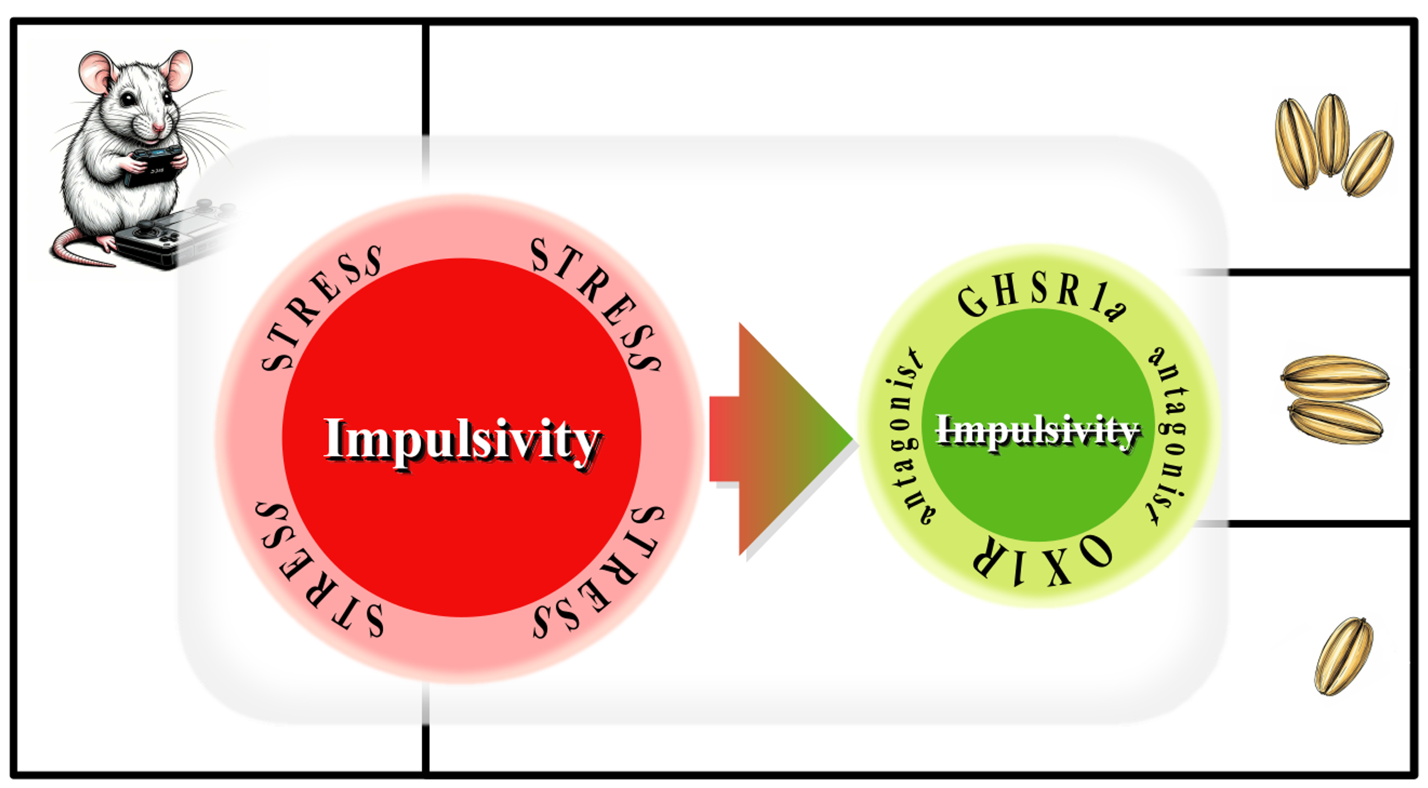
Материалы и методы. Импульсивный компонент принятия решений у крыс в условиях стресса оценивали с помощью модификации теста на азартные игры Iowa (IGT) в установке, состоящей из трёх рукавов (C1–3), в каждом из которых выдавались семена подсолнечника с определённой величиной и вероятностью (C1 — одно семя при каждом заходе, C2 — 2 семени при каждом втором заходе, C3 — 3 семени при каждом третьем заходе). В качестве аверсивного воздействия использовали стресс, вызванный электростимулячией конечностей (или "Foot Shock", 0,6 мА, 1 мин, 1 раз в неделю), и формирование посттравматического стрессового расстройства после взаимодействия с хищником. Новый пептидный антагонист грелина агрелакс и селективный антагонист рецепторов орексина 1-го типа SB-408124 вводили интраназально. Экспрессию мРНК в префронтальной коре, гипоталамусе и миндалевидном теле оценивали методом полимеразной цепной реакции.
Результаты. Эксперименты показали, что электростимуляция конечностей и взаимодействие с хищником влияют на различные компоненты импульсивности в тесте IGT для крыс. Электростимуляция конечностей (FS) влияла на контроль за импульсами, что проявлялось в увеличении числа переходов между рукавами с 29,4 ± 2,4 до 40,0 ± 2,6. На биохимическом уровне FS достоверно снижал экспрессию мРНК рецептора грелина в префронтальной коре (0,79 ± 0,18) и миндалевидном теле (0,15 ± 0,03), а также повышал экспрессию мРНК рецептора орексина 1-го типа в префронтальной коре (1330,38 ± 105,54) и гипоталамусе (44,71 ± 16,24). Посттравматическое стрессовое расстройство (ПТСР), сформировавшееся в результате взаимодействия с хищником, повлияло на принятие решений крысами, достоверно увеличив долю выбора наиболее рискованного варианта C3 с 45,8 ± 1,2 до 55,3 ± 3,5%. Количество переходов, увеличивающихся после FS, было снижено только под действием агрелакса до 26,8 ± 3,0, а доля C3 была снижена как под действием агрелакса (43,2 ± 3,1%), так и SB-408124 (44,3 ± 1,6%) у крыс с ПТСР.
Выводы. Данное исследование подтверждает, что повторяющийся умеренный и однократный сильный стресс увеличивают импульсивность у крыс в тесте IGT, но влияют на разные компоненты поведения — импульсный контроль и принятие решений соответственно. Антагонисты грелиновых и орексиновых рецепторов 1-го типа снижают импульсивность, вызванную сформировавшимся посттравматическим стрессовым расстройством, но эффект от электростимуляции конечностей нивелирует только агрелакс. Согласно результатам, электростимуляций конечностей снижала экспрессию мРНК рецептора грелина в префронтальной коре и миндалевидном теле и увеличивала экспрессию мРНК рецептора орексина 1-го типа в префронтальной коре и гипоталамусе.
Графическая аннотация
Ключевые слова:
Зависимость, электростимуляция конечностей, импульсивность, игровой тест Iowa, орексигенные пептиды, посттравматическое стрессовое расстройствоБиблиографические ссылки
Abtahi S, Howell E, Currie PJ (2018) Accumbal ghrelin and glucagon-like peptide 1 signaling in alcohol reward in female rats. Neuroreport 29(12): 1046–1053. https://doi.org/10.1097/WNR.0000000000001071 [PubMed]
André F, Broman N, Håkansson A, Claesdotter-Knutsson E (2020) Gaming addiction, problematic gaming and engaged gaming: prevalence and associated characteristics. Addictive Behaviors Reports 12: 100324. https://doi.org/10.1016/j.abrep.2020.100324[PubMed] [PMC]
Avaliani TV, Apraksina NK, Tsikunov SG (2022) The effect of vital stress on the bioelectric activity of the brain and the behavior of female rats. Medical Academic Journal [Medicinskij Akademicheskij Zhurnal] 22(1): 43–50. https://doi.org/10.17816/MAJ90520 [in Russian]
Azizi H, Mirnajafi-Zadeh J, Rohampour K, Semnanian S (2010) Antagonism of orexin type 1 receptors in the locus coeruleus attenuates signs of naloxone-precipitated morphine withdrawal in rats. Neuroscience Letters 482(3): 255–259. ttps://doi.org/10.1016/j.neulet.2010.07.050 [PubMed]
Bahi A, Tolle V, Fehrentz JA, Brunel L, Martinez J, Tomasetto CL, Karam SM (2013) Ghrelin knockout mice show decreased voluntary alcohol consumption and reduced ethanol-induced conditioned place preference. Peptides 43: 48–55. https://doi.org/10.1016/j.peptides.2013.02.008 [PubMed]
Baimel C, Bartlett SE, Chiou LC, Lawrence AJ, Muschamp JW, Patkar O, Tung LW, Borgland SL (2015) Orexin/hypocretin role in reward: implications for opioid and other addictions. British Journal of Pharmacology 172(2): 334–348. https://doi.org/10.1111/bph.12639 [PubMed] [PMC]
Bakhshani NM (2014) Impulsivity: a predisposition toward risky behaviors. International Journal of High Risk Behaviors and Addiction 3(2): e20428. https://doi.org/10.5812/ijhrba.20428 [PubMed] [PMC]
Chen Y, Lu J, Wang L, Gao X (2023) Effective interventions for gaming disorder: a systematic review of randomized control trials. Frontiers in Psychiatry 14: 1098922. https://doi.org/10.3389/fpsyt.2023.1098922 [PubMed] [PMC]
Delfs JM, Zhu Y, Druhan JP, Aston-Jones G (2000) Noradrenaline in the ventral forebrain is critical for opiate withdrawal-induced aversion. Nature 403(6768): 430–434. https://doi.org/10.1038/35000212 [PubMed]
Fadel J, Deutch AY (2002) Anatomical substrates of orexin-dopamine interactions: lateral hypothalamic projections to the ventral tegmental area. Neuroscience 111(2): 379–387. https://doi.org/10.1016/S0306-4522(02)00017-9 [PubMed]
Gajewska A, Strzelecki D, Gawlik-Kotelnicka O (2023) Ghrelin as a biomarker of immunometabolic depression and its connection with dysbiosis. Nutrients 15(18): 3960. https://doi.org/10.3390/nu15183960 [PubMed] [PMC]
Georgescu D, Zachariou V, Barrot M, Mieda M, Willie JT, Eisch AJ, Yanagisawa M, Nestler EJ, DiLeone RJ (2003) Involvement of the lateral hypothalamic peptide orexin in morphine dependence and withdrawal. Journal of Neuroscience 23(8): 3106–3111. https://doi.org/10.1523/JNEUROSCI.23-08-03106.2003 [PubMed] [PMC]
Giedd JN (2008) The teen brain: insights from neuroimaging. Journal of Adolescent Health 42(4): 335–343. https://doi.org/10.1016/j.jadohealth.2008.01.007 [PubMed]
Gomez JL, Cunningham CL, Finn DA, Young EA, Helpenstell LK, Schuette LM, Fidler TL, Kosten TA, Ryabinin AE (2015) Differential effects of ghrelin antagonists on alcohol drinking and reinforcement in mouse and rat models of alcohol dependence. Neuropharmacology 97: 182–193. https://doi.org/10.1016/j.neuropharm.2015.05.026 [PubMed] [PMC]
Harris GC, Wimmer M, Aston-Jones G (2005) A role for lateral hypothalamic orexin neurons in reward seeking. Nature 437(7058): 556–559. https://doi.org/10.1038/nature04071[PubMed]
Hultman C, Tjernström N, Vadlin S, Rehn M, Nilsson KW, Roman E, Åslund C (2022) Exploring decision-making strategies in the Iowa gambling task and rat gambling task. Frontiers in Behavioral Neuroscience 16: 964348. https://doi.org/10.3389/fnbeh.2022.964348 [PubMed] [PMC]
Kern A, Mavrikaki M, Ullrich C, Albarran-Zeckler R, Brantley AF, Smith RG (2015) Hippocampal dopamine/DRD1 signaling dependent on the ghrelin receptor. Cell 163(5): 1176–1190. https://doi.org/10.1016/j.cell.2015.10.062 [PubMed] [PMC]
Koob GF, Bloom FE (1988) Cellular and molecular mechanisms of drug dependence. Science 242(4879): 715–723. https://doi.org/10.1126/science.2903550 [PubMed]
Koob GF, Volkow ND (2016) Neurobiology of addiction: A neurocircuitry analysis. Lancet Psychiatry 3(8): 760–773. https://doi.org/10.1016/S2215-0366(16)00104-8 [PubMed] [PMC]
Koopmann A, Bach P, Schuster R, Bumb JM, Vollstädt-Klein S, Reinhard I, Rietschel M, Witt SH, Wiedemann K, Kiefer F (2019) Ghrelin modulates mesolimbic reactivity to alcohol cues in alcohol-addicted subjects: A functional imaging study. Addiction Biology 24(5): 1066–1076. https://doi.org/10.1111/adb.12651 [PubMed]
Kozak K, Lucatch AM, Lowe DJE, Balodis IM, MacKillop J, George TP (2019) The neurobiology of impulsivity and substance use disorders: Implications for treatment. Annals of the New York Academy of Sciences 1451(1): 71–91. https://doi.org/10.1111/nyas.13977 [PubMed] [PMC]
Laorden ML, Ferenczi S, Pintér-Kübler B, González-Martín LL, Lasheras MC, Kovács KJ, Milanés MV, Núñez C (2012) Hypothalamic orexin-A neurons are involved in the response of the brain stress system to morphine withdrawal. PLoS One 7(5): e36871. https://doi.org/10.1371/journal.pone.0036871 [PubMed] [PMC]
Lebedev AA, Bychkov ER, Lukashkova VV, Lebedev VA, Efimov NS, Shabanov PD (2024) A new ghrelin receptor antagonist, agrelax, reduces emotional overeating caused by stimulation of the lateral hypothalamus reward zone in well-fed rats. Reviews on Clinical Pharmacology and Drug Therapy [Obzory Po Klinicheskoj Farmakologii I Lekarstvennoj Terapii] 21(4): 339–348. https://doi.org/10.17816/RCF568925 [in Russian]
Lebedev AA, Lukashkova VV, Pshenichnaya AG, Bychkov ER, Lebedev VA, Rusanovsky VV, Shabanov PD (2023a) A new ghrelin receptor antagonist agrelax participates in the control of emotional-explorative behavior and anxiety in rats. Psychopharmacology and Addiction Biology [Psihofarmakologiya I Biologicheskaya Narkologiya] 14(1): 69–79. https://doi.org/10.17816/phbn321624 [in Russian]
Lebedev AA, Purveev SS, Sekste EA, Reichardt BA, Bychkov ER, Shabanov PD (2023b) Studying the involvement of ghrelin in the mechanism of gambling addiction in rats after exposure to psychogenic stressors in early ontogenesis. Russian Journal of Physiology [Rossijskij Fiziologicheskij Zhurnal Im. I.M. Sechenova] 109(8): 1080–1093. https://doi.org/10.31857/S086981392308006X [in Russian]
Lebedev AA, Pyurveev SS, Nadbitova ND, Lizunov AV, Bychkov ER, Lukashov VV, Evdokimova NR, Netesa MA, Lebedev VA, Shabanov PD (2023) Reduction of compulsive overeating in rats caused by maternal deprivation in early ontogenesis using a new ghrelin receptor antagonist agrelax. Reviews on Clinical Pharmacology and Drug Therapy [Obzory Po Klinicheskoj Farmakologii I Lekarstvennoj Terapii] 21(3): 255–262. https://doi.org/10.17816/RCF562841[in Russian]
Lewis RG, Florio E, Punzo D, Borrelli E (2021) The brain’s reward system in health and disease. Advances in Experimental Medicine and Biology 1344: 57–69. https://doi.org/10.1007/978-3-030-81147-1_4 [PubMed] [PMC]
Livak KJ, Schmittgen TD (2001) Analysis of relative gene expression data using real-time quantitative PCR and the 2−ΔΔCT method. Methods 25(4): 402–408.https://doi.org/10.1006/meth.2001.1262 [PubMed]
Mann K, Fauth-Bühler M, Higuchi S, Potenza MN, Saunders JB (2016) Pathological gambling: a behavioral addiction. World Psychiatry 15(3): 297–298. https://doi.org/10.1002/wps.20373[PubMed] [PMC]
Mustafá ER, Cordisco González S, Damian M, Cantel S, Denoyelle S, Wagner R, Schiöth HB, Fehrentz JA, Banères JL, Perelló M, Raingo J (2021) LEAP2 impairs the capability of the growth hormone secretagogue receptor to regulate dopamine D2 receptor signaling. Frontiers in Pharmacology 12: 712437. https://doi.org/10.3389/fphar.2021.712437[PubMed] [PMC]
Nadbitova ND, Pyurveev SS, Netesa MA, Lebedev AA, Shabanov PD (2024) Effects of the new ghrelin receptor antagonist agrelax on compulsive overeating induced by acute and chronic stress in rats. Psychopharmacology and Addiction Biology [Psihofarmakologiya I Biologicheskaya Narkologiya] 15(3): 199–210. https://doi.org/10.17816/phbn635868 [in Russian]
Olive MF, Koenig HN, Nannini MA, Hodge CW (2002) Elevated extracellular CRF levels in the bed nucleus of the stria terminalis during ethanol withdrawal and reduction by subsequent ethanol intake. Pharmacology Biochemistry and Behavior 72(1–2): 213–220. https://doi.org/10.1016/S0091-3057(01)00748-1 [PubMed] [PMC]
Punia K, Balodis IM (2019) An overview of the neurobiology of impulsivity in gambling and gaming disorder. Current Behavioral Neuroscience Reports 6: 209–218. https://doi.org/10.1007/s40473-019-00190-5
Ralevski E, Horvath TL, Shanabrough M, Hayden R, Newcomb J, Petrakis I (2017) Ghrelin is suppressed by intravenous alcohol and is related to stimulant and sedative effects of alcohol. Alcohol and Alcoholism 52(4): 431–438. https://doi.org/10.1093/alcalc/agx022 [PubMed]
Rasmussen DD, Boldt BM, Bryant CA, Mitton DR, Larsen SA, Wilkinson CW (2000) Chronic daily ethanol and withdrawal: Long-term changes in the hypothalamo-pituitary-adrenal axis. Alcoholism: Clinical and Experimental Research 24(12): 1836–1849. [PubMed]
Reikhardt BA, Shabanov PD (2022) Ghrelin mechanisms of food reward. Part 2. Interaction of ghrelin with hormones, neuropeptides and other endogenous ligands. Reviews on Clinical Pharmacology and Drug Therapy [Obzory Po Klinicheskoj Farmakologii I Lekarstvennoj Terapii] 20(3): 229–254. https://doi.org/10.17816/RCF203229-254 [in Russian]
Roy A, Pandey SC (2002) The decreased cellular expression of neuropeptide Y protein in rat brain structures during ethanol withdrawal after chronic ethanol exposure. Alcoholism: Clinical and Experimental Research 26(6): 796–803. [PubMed]
Sekste EA, Lebedev AA, Bychkov ER, Airapetov MI, Gramota KE, Thyssen IY, Shabanov PD (2021) Increase in the level of orexin receptor 1 (Ox1r) mRNA in the brain structures of rats prone to impulsivity in behavior. Biochemistry (Moscow) 67(5): 411–417.https://doi.org/10.18097/PBMC20216705411 [PubMed]
Sha L, Dey P, Khess CR, Khitiz KK (2021) The association of plasma acyl ghrelin level with alcohol craving in early abstinent alcohol dependent patients. Journal of Postgraduate Medicine 67(1): 12–17. https://doi.org/10.4103/jpgm.JPGM_1018_20 [PubMed] [PMC]
Shabanov PD, Blazhenko AA, Devyashin AS, Khokhlov PP, Lebedev AA (2021) In search of new brain biomarkers of stress. Research Results in Pharmacology 7(1): 41–46. https://doi.org/10.3897/rrpharmacology.7.63326
Shabanov PD, Lebedev AA, Bychkov ER, Lavrov NV, Morozov VI (2020) Neurochemical mechanisms and pharmacology of ghrelins. Reviews on Clinical Pharmacology and Drug Therapy [Obzory Po Klinicheskoj Farmakologii I Lekarstvennoj Terapii] 18(1): 5–22. https://doi.org/10.17816/RCF1815-22 [in Russian]
Shabanov PD, Lebedev AA, Morozov AI, Roik RO (2015) Effects of intraventricular administration of orexin and its antagonist on the reinforcing properties of psychoactive substances. Reviews on Clinical Pharmacology and Drug Therapy [Obzory Po Klinicheskoj Farmakologii I Lekarstvennoj Terapii] 13(4): 29–36. [in Russian]
Shaham Y, Shalev U, Lu L, de Wit H, Stewart J (2003) The reinstatement model of drug relapse: history, methodology and major findings. Psychopharmacology 168(1–2): 3–20. https://doi.org/10.1007/s00213-002-1224-x [PubMed]
Shalev U, Grimm JW, Shaham Y (2002) Neurobiology of relapse to heroin and cocaine seeking: a review. Pharmacological Reviews 54(1): 1–42. https://doi.org/10.1124/pr.54.1.1 [PubMed]
Shevchouk OT, Tufvesson-Alm M, Jerlhag E (2021) Appetite-regulatory peptides in addiction processes: from bench to bedside. Frontiers in Neuroscience 15: 774050. https://doi.org/10.3389/fnins.2021.774050 [PubMed] [PMC]
Sussman CJ, Harper JM, Stahl JL, Weigle P (2018) Internet and video game addictions: diagnosis, epidemiology, and neurobiology. Child and Adolescent Psychiatric Clinics of North America 27(2): 307–326. https://doi.org/10.1016/j.chc.2017.11.015 [PubMed]
Tissen IY, Lebedev AA, Bychkov ER, Lavrov NV, Morozov VI, Shabanov PD (2020) Orexins and the brain reinforcing systems. Reviews on Clinical Pharmacology and Drug Therapy [Obzory Po Klinicheskoj Farmakologii I Lekarstvennoj Terapii] 17(4): 5–18. https://doi.org/10.17816/RCF1745-18 [in Russian]
Tissen IY, Yakushina ND, Lebedev AA, Pshenichnaya AG, Bychkov ER, Tsykunov SG, Shabanov PD (2018) Effect of SB-408124 on compulsive behavior and anxiety after stress in rats. Reviews on Clinical Pharmacology and Drug Therapy [Obzory Po Klinicheskoj Farmakologii I Lekarstvennoj Terapii] 16(1): 34–42. https://doi.org/10.17816/RCF16134-42 [in Russian]
Trivedi P, Yu H, MacNeil DJ, Van der Ploeg LH, Guan XM (1998) Distribution of orexin receptor mRNA in the rat brain. FEBS Letters 438(1–2): 71–75. https://doi.org/10.1016/S0014-5793(98)01266-6 [PubMed]
Volkow ND, Koob GF, McLellan AT (2016) Neurobiologic advances from the brain disease model of addiction. New England Journal of Medicine 374(4): 363–371. https://doi.org/10.1056/NEJMra1511480 [PubMed]
Wang Q, Yu K, Wang J, Lin H, Wu Y, Wang W (2012) Predator stress-induced emotional arousal and hippocampal receptor alterations in rats. Behavioural Brain Research 230(1): 167–174. https://doi.org/10.1016/j.bbr.2012.01.051 [PubMed]
Wang S, Wang J, Lv X (2018) Selection of reference genes for expression analysis in mouse models of acute alcoholic liver injury. International Journal of Molecular Medicine 41(6): 3527–3536. https://doi.org/10.3892/ijmm.2018.3527 [PubMed]
Weiss F, Ciccocioppo R, Parsons LH, Katner S, Liu X, Zorrilla EP, Valdez GR, Ben-Shahar O, Angeletti S, Richter RR (2001) Compulsive drug-seeking behavior and relapse. Annals of the New York Academy of Sciences 937: 1–26. https://doi.org/10.1111/j.1749-6632.2001.tb03556.x [PubMed]
Weiss F, Markou A, Lorang MT, Koob GF (1992) Basal extracellular dopamine levels decrease during cocaine withdrawal. Brain Research 593(2): 314–318. https://doi.org/10.1016/0006-8993(92)91327-B [PubMed]
Wittek CT, Finserås TR, Pallesen S, Mentzoni RA, Hanss D, Griffiths MD, Molde H (2016) Prevalence and predictors of video game addiction: A Study Based on a national representative sample of gamers. International Journal of Mental Health and Addiction 14(5): 672–686. https://doi.org/10.1007/s11469-015-9592-8 [PubMed] [PMC]
Yakushina ND, Tissen IY, Lebedev AA, Pshenichnaya AG, Bychkov ER, Tsikunov SG, Shabanov PD (2017) Effect of intranasal ghrelin on compulsive behavior and anxiety after stress in rats. Reviews on Clinical Pharmacology and Drug Therapy [Obzory Po Klinicheskoj Farmakologii I Lekarstvennoj Terapii] 15(3): 28–37. [in Russian]
Загрузки
Опубликован
Как цитировать
Выпуск
Раздел
Лицензия
Copyright (c) 2026 Netesa MA, Lebedev AA, Sekste EA, Kosyakova GP, Lebedev VA, Bychkov ER, Shabanov PD

Это произведение доступно по лицензии Creative Commons «Attribution» («Атрибуция») 4.0 Всемирная.
 Русский
 English